HWP at EXPOAPA 2025: Water Resilience, Full Cost Recovery and Smarter Investment
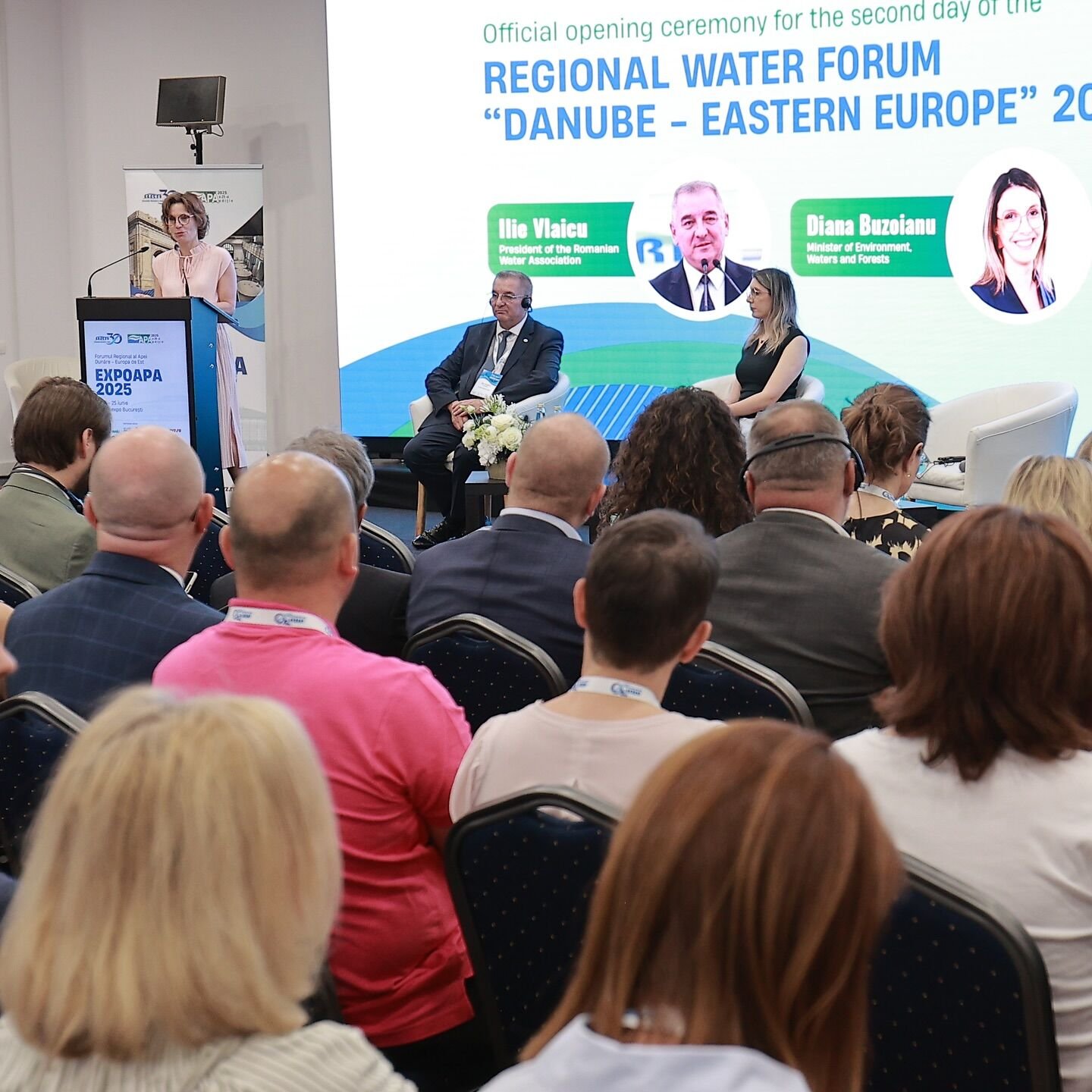
The Hungarian Water Partnership (HWP) was represented at EXPOAPA 2025 in Bucharest, where regional water-sector leaders, policymakers and professional organisations gathered to discuss the future of water resilience in Eastern Europe.
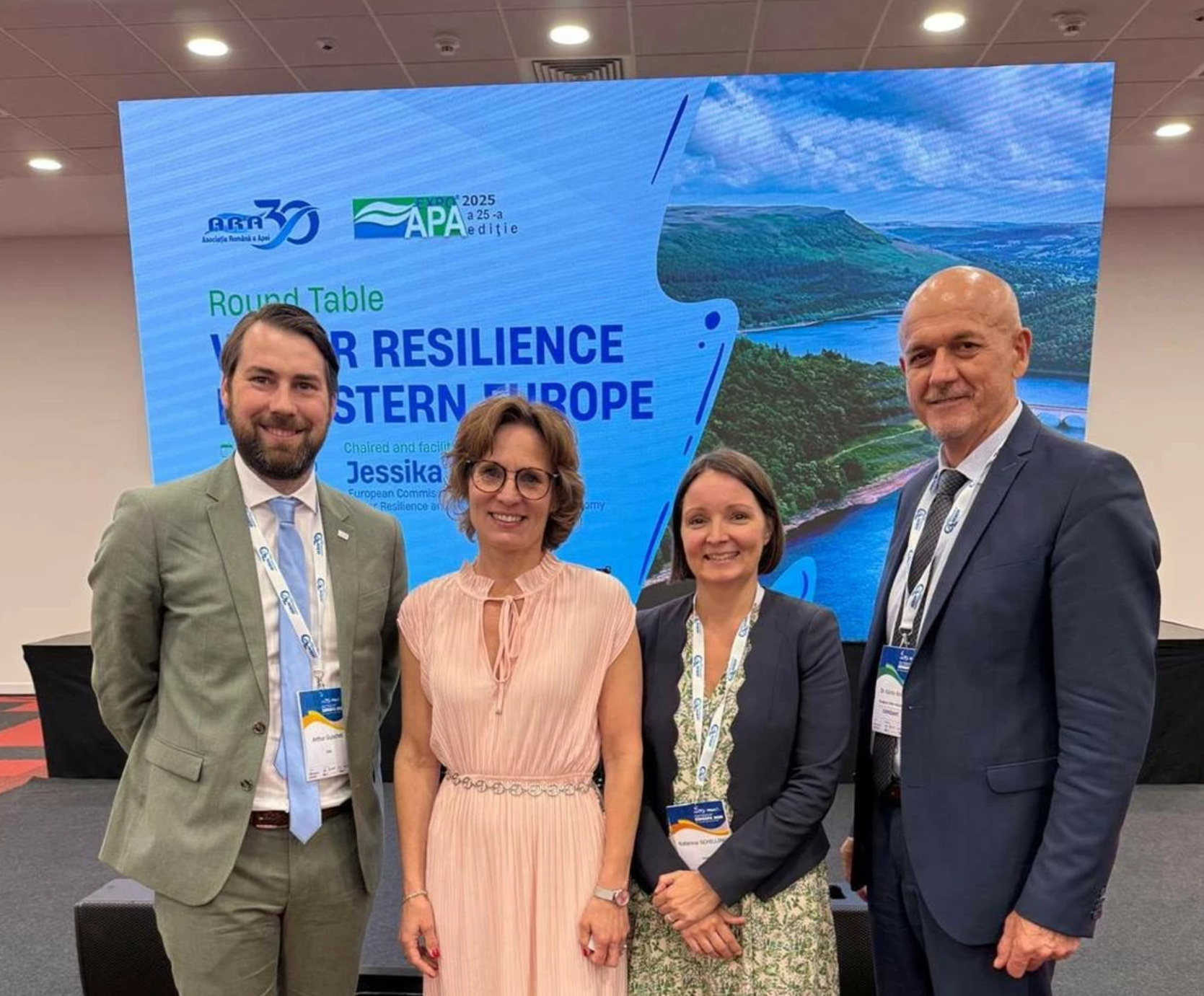
A key highlight of the event was the high-level roundtable on “Water Resilience in Eastern Europe,” organised in the context of the newly launched European Water Resilience Strategy and chaired by Jessika Roswall, European Commissioner for Environment, Water Resilience and a Competitive Circular Economy. Dr. Károly Kovács, President of HWP and the Hungarian Water Association (MaSzeSz), and former President of the European Water Association (EWA), represented Hungarian and regional professional perspectives during the discussions.
Water resilience as a regional priority
The roundtable brought together representatives from across Eastern Europe to address common challenges including:
water scarcity,
pollution,
climate change,
increasing pressure on ageing infrastructure, and
the need for more resilient and financially sustainable water services.
The discussions reflected the main pillars of the European water resilience agenda: restoring and protecting the water cycle, building a water-smart economy, ensuring clean and affordable water and sanitation, and strengthening public engagement around water resilience.
For HWP, these priorities closely align with the challenges already being addressed by Hungarian water-sector companies and professional organisations.
Can we build a water-smart economy without knowing the true cost of water?
A central issue raised during the discussions was the lack of transparent and consistent information about the full economic value and cost of water.
Dr. Kovács highlighted that meaningful water-sector investment decisions require a clearer understanding of the full range of costs associated with water services, including:
water-resource costs,
infrastructure and service costs,
stormwater-management expenditure,
environmental costs, and
the cost of inaction.
Without reliable methodologies for calculating these costs, principles such as full cost recovery and polluter pays remain difficult to apply consistently.
This also affects investment in water reuse, stormwater utilisation and other circular water-management solutions, because the economic value of these alternatives is difficult to assess when conventional water services are systematically undervalued.
Affordability and the value of water
The discussion also highlighted an important contradiction.
Despite the essential nature of drinking water and sanitation services, household expenditure on public water services remains comparatively low. Dr. Kovács cited international and national research indicating that water services generally account for less than 2% of household income across income categories.
Research also suggests that many citizens would be willing to contribute more toward long-term water security and resilient infrastructure if the value and cost of water services were communicated more clearly.
For HWP, this reinforces the importance of combining technical solutions with economic transparency, public awareness and long-term infrastructure planning.
Practical tools for smarter water investment
HWP also used the regional dialogue to promote practical approaches that can support more financially sustainable decision-making.
Among the measures highlighted were:
Dynamic Cost Comparison
The Dynamic Cost Comparison Calculation (DCC) methodology developed and adopted within the European Water Association provides a framework for comparing infrastructure alternatives over their full life cycle rather than relying primarily on initial investment costs.
This type of life-cycle approach can support utilities and decision-makers in selecting solutions that provide better long-term value and more sustainable use of available financial resources.
Incentives for stormwater management
Another proposal focused on creating stronger economic incentives for the use, retention and infiltration of rainwater and stormwater.
Such measures can contribute simultaneously to:
reducing urban pollution,
decreasing pressure on drainage systems,
improving climate resilience,
supporting groundwater recharge, and
reducing urban heat impacts.
The broader message is that stormwater should increasingly be viewed as a resource rather than simply a disposal problem.
Professional capacity and public awareness
HWP also emphasised the role of professional associations in strengthening sectoral capacity and improving public understanding of the value of water.
Technical expertise, financial methodologies and public awareness all need to develop together if the objectives of European water resilience policy are to translate into practical action.
Connecting European, African and Asian water cooperation
The EXPOAPA discussions also created an opportunity to highlight HWP’s wider international network.
Commissioner Roswall welcomed the connections offered through European professional organisations to partners in Africa through AfWASA and in Asia through ASEM Water.
For HWP, these links are especially important. Many of the challenges discussed in Bucharest — affordability, infrastructure renewal, water reuse, stormwater management and the financing of resilient systems — are not limited to Eastern Europe. They are shared by utilities and governments across continents. Through its participation in European, African and Eurasian professional networks, HWP aims to support the exchange of practical experience and connect Hungarian water expertise with international policy and market needs.
From policy dialogue to practical solutions
EXPOAPA 2025 demonstrated that water resilience cannot be achieved through regulation alone.
It requires a combination of:
sound economic decision-making,
appropriate financing,
resilient technologies,
transparent valuation of water,
professional capacity building, and
cooperation between policymakers, utilities, industry and citizens.
For the Hungarian Water Partnership, participation in these discussions is part of a broader mission to ensure that Hungarian technologies, professional knowledge and economic approaches contribute to the development of a more resilient European water sector.
The conversations initiated in Bucharest will continue, creating further opportunities for HWP and its partners to contribute to the practical implementation of the European Water Resilience Strategy.